

Antique jewellery holds such a fascination for many, and most collectors are keen to learn as much as they can about these exquisite pieces. Understanding the history, symbolism, and craftsmanship behind each item gives collectors added confidence when acquiring an item, ensuring that every purchase is both meaningful and informed.
Beyond their aesthetic appeal, antique pieces tell a story of the era they came from, the people who wore them, and the societal values of the time. This deeper knowledge can make the difference between simply owning a piece of jewellery and truly appreciating its cultural and historical significance.
In this article, we will take a detailed look at some of the common symbols that are found on antique and vintage jewellery items, exploring their meanings and the history behind them. Understanding these symbols can help collectors decode the messages and emotions embedded in these pieces, often revealing fascinating insights into love, luck, and personal expression through the ages.
In This Article
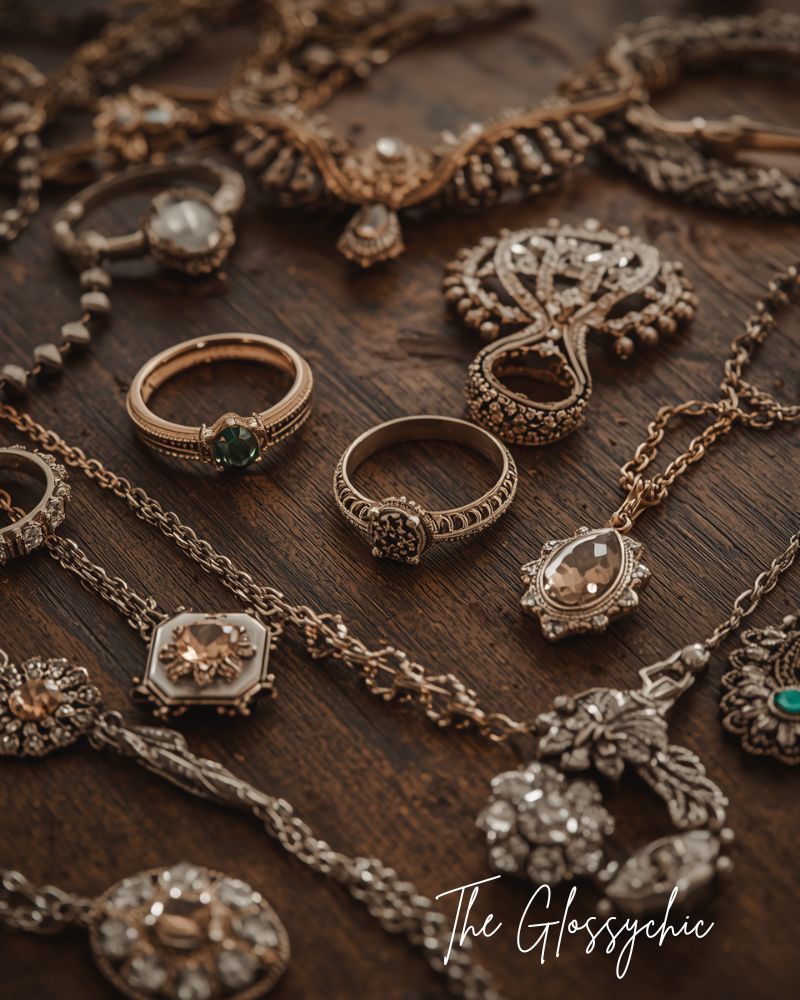
Antique jewellery symbols and their meaning
Look for deeper meanings
This is especially pertinent when looking at Victorian jewellery. During the Victorian era, strict societal values and codes of conduct were observed, and jewellery often acted as a discreet form of communication. Symbols were not merely decorative; they were imbued with layered meanings and were often used to convey messages that could not be expressed openly in public. Lovers, mourners, and even friends could communicate sentiments like affection, loyalty, remembrance, or devotion through carefully chosen designs.
Take, for example, the crown, a common symbol that universally represents victory or triumph. In a Victorian piece, however, a crown placed above a heart transforms its meaning completely. It becomes the “ruler of my heart,” potentially serving as a subtle declaration of love. Such symbolic language allowed clandestine lovers to express their feelings without fear of public scrutiny, providing a fascinating glimpse into the coded world of antique jewellery. Similarly, motifs like clasped hands, ivy, or forget-me-nots carried messages of friendship, loyalty, or eternal remembrance.
If you would like to view stunning antique jewellery, you can easily find antique shops online through a brief Google search. Many online antique retailers offer extensive catalogues, allowing collectors to explore and acquire fine antique and vintage jewellery at reasonable prices. By carefully studying the pieces available, you can gain an understanding of how certain motifs were popular in specific periods and the meanings they conveyed.
Related Posts


Common good fortune symbols
Jewellery has long been used to invite protection, luck, or prosperity, and certain motifs recur across different eras due to their association with good fortune. Collectors often look for these symbols, both for their aesthetic charm and the stories they tell.
- The horseshoe: Universally regarded as a sign of good luck, the horseshoe motif has been widely used from the Georgian period through to the early 20th century. When incorporated into rings, brooches, or pendants, it was believed to ward off evil spirits while attracting positive energy.
- The arrow: Arrows in antique jewellery are versatile symbols. They could signify mortality, referencing Cupid’s arrow and the fleeting nature of life, or represent romance and desire. During the Victorian era, arrows were frequently paired with hearts to signify love and passion.
- The four-leaf clover: Traditionally associated with luck and prosperity, the four-leaf clover appeared in both Edwardian and Georgian jewellery. Its rarity made it especially coveted, and it was often given as a charm to bring fortune to the wearer.
- The eye: Often referred to as the “evil eye” or protective eye, this symbol was believed to safeguard the wearer against negative energies or ill will. Found in rings, lockets, and bracelets, it served both decorative and protective purposes, adding another layer of meaning to the piece.
When seeking antique jewellery, it is best to search through reputable online antique dealers who have established a strong reputation in the industry. This ensures that the items you purchase are authentic, fairly priced, and accurately described. Dealers who specialise in vintage and antique pieces are also more likely to provide detailed histories of the jewellery, including the meanings behind the symbols used.
Animal symbols
Animals have been powerful motifs in jewellery for centuries, often representing human qualities or philosophical ideas. By incorporating animal imagery, jewellers could convey messages about character, aspiration, or protection.
- Bees: Representing diligence, efficiency, and organisation, bees were a symbol of industriousness. A piece featuring a bee motif could be a reminder of hard work or a tribute to the wearer’s own productive nature.
- Butterflies: Seen as symbols of transformation and the soul, butterflies often appeared in mourning jewellery or as a representation of spiritual renewal.
- Snakes: Snakes frequently symbolised everlasting love and eternity, particularly in Victorian and Art Nouveau pieces. Their coiled form visually reinforces the idea of continuity and unending devotion.
- Eagles: Known for their majesty and strength, eagles symbolised freedom, vision, and power. They appeared in both military-related jewellery and decorative items meant to inspire courage.
- Peacocks: With their dazzling plumage, peacocks represented beauty, pride, and renewal. These motifs were popular in jewellery designed to highlight luxury and sophistication.
- Owls: A symbol of wisdom and vigilance, owls were often used in pendants or brooches to convey intellect and discernment.
- Snails: Surprisingly, snails were used to signify perseverance and patience, reflecting the slow and steady approach to life.
- Phoenix: Symbolising rebirth and immortality, the phoenix appeared in jewellery intended to commemorate life’s transformative moments or to celebrate renewal after hardship.
Maker’s marks
It is important to distinguish symbols from maker’s marks. While symbols carry meaning and decorative appeal, maker’s marks serve a practical purpose—they identify who made the piece. These can be initials, signatures, or even simple unique markings. In some cases, they may also indicate the date of manufacture, particularly on larger items such as pocket watches.
Maker’s marks are commonly found on pieces such as antique pocket watches. They help collectors verify authenticity, trace the jeweller or manufacturer, and even determine the era in which the item was produced. Additionally, you may encounter gold purity stamps or, in the case of silver, the number 925, indicating 92.5% silver content. Recognising these marks can be vital for collectors seeking genuine, high-quality pieces.
When acquiring antique jewellery, always deal with a reputable antique jeweller with a solid standing in the local community. Such dealers are more likely to sell items that are authentic, fairly priced, and accurately described. Avoid purchasing from unverified sources where the risk of forgery or misrepresentation is higher.
The Internet can be an invaluable tool for locating trusted dealers. Many reputable jewellers maintain websites with detailed catalogues, histories, and photographs of their pieces. By researching and visiting local antique dealers, collectors can examine items in person, ask informed questions, and gain confidence in their acquisitions. Online resources also provide historical context, guides to jewellery symbolism, and tips for identifying genuine pieces, which are all essential for both novice and seasoned collectors.
Conclusion
Understanding the symbols and marks on antique jewellery transforms the collecting experience from a simple aesthetic pursuit to a deeply enriching journey through history, art, and culture. Every piece carries a story, whether it is a Victorian heart-and-crown motif signalling secret love, a four-leaf clover offering luck, or a phoenix commemorating rebirth. By studying these symbols, learning to recognise maker’s marks, and sourcing pieces from reputable dealers, collectors can enjoy the dual satisfaction of beauty and meaning in every acquisition.
Whether you are drawn to animal motifs, symbolic gemstones, or intricate craftsmanship, the world of antique jewellery offers endless fascination. Each item is a tangible connection to the past, a reminder of the values, emotions, and artistic sensibilities of the people who created and cherished them. For those looking to begin or expand a collection, there is no better time to immerse yourself in this timeless and captivating world.

